


What is it?
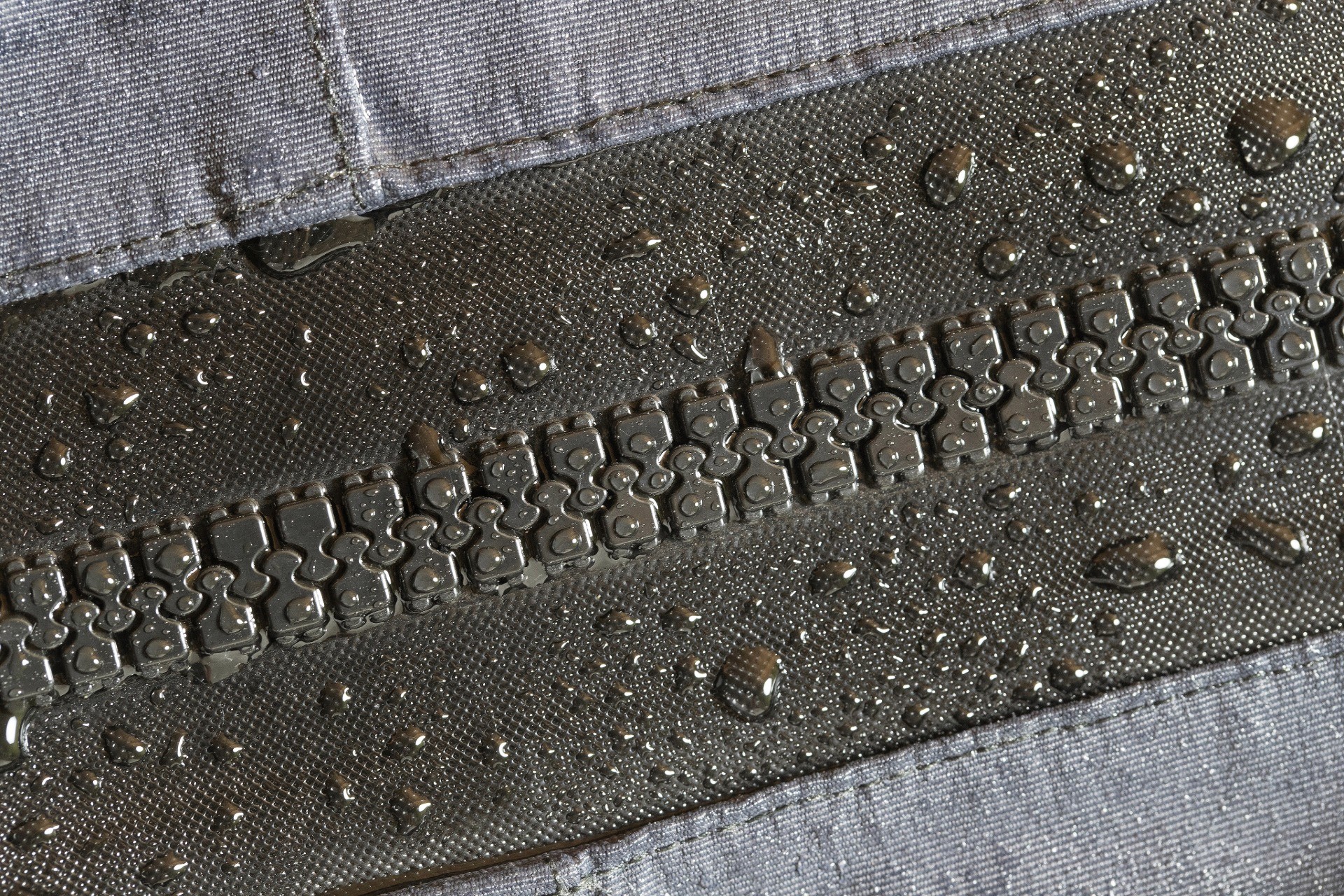
PFAS (Per- and polyfluoroalkyl substances), also known as "forever chemicals", are a large category of man-made chemicals. They help clothing resist water, oil, stains and heat. Apparel such as outdoor jackets, waterproof garments, sportswear and footwear often use PFAS.
Why should we care?
PFAS don’t break down easily and stay in the environment for thousands of years. They are also in cleaning products, food packaging, nonstick cookware, cosmetics, personal care items like dental floss, and more.
PFAS cause a variety of health problems. These include effects on the reproductive system, a higher risk of some cancers, thyroid problems, and more. As a result, countries and regions worldwide have introduced tighter restrictions on PFAS. These rules are rapidly affecting clothing and textiles, pushing brands to act now.
How is it regulated?
There isn't a universal PFAS law, but each region has its own restrictions. The EU regulates various PFAS under different regulations like REACH and POPs. The EU's chemical rules already cover PFAS, including PFOS, PFOA, and PFHxS.
From 10 October 2026, clothing accessories and footwear will have new PFHxA limits. Under this rule, apparel brands cannot sell clothing and footwear in the EU if they contain 25 ppb or more of PFHxA and its salts. Clothing and footwear also cannot contain 1,000 ppb or more of PFHxA-related substances, measured in each component of an article.
The rules do not stop there. From 10 October 2027, the same PFHxA limits will apply to other non-clothing textiles. Meanwhile, the EU is working on a broader restriction covering PFAS as a whole. A proposed total PFAS ban might take effect in the EU, indicating where regulation is heading.
For clothing brands, this means meeting EU PFAS requirements isn't about a single rule or substance. Brands must identify:
Which PFAS may be in their products,
What restrictions apply to the materials they use,
And what deadlines apply in the markets where they sell.
In the United States, no single law controls PFAS in apparel. Instead, each state sets its own rules. Some rules focus on intentionally added PFAS, while others require labels or reports. For example, California's regulations might ban clothing that complies with New York's rules.
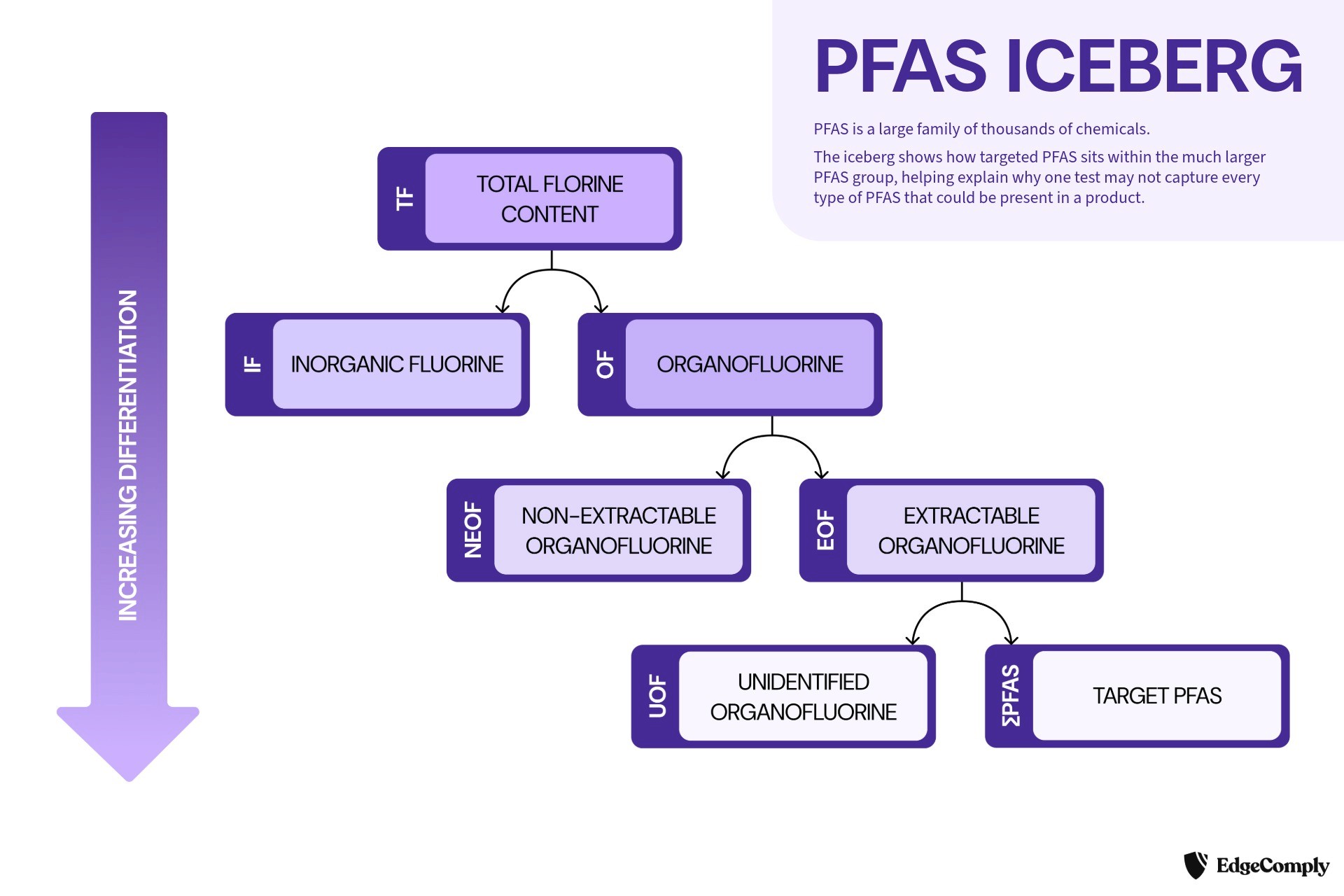
In 2025, California restricted PFAS in textile products, setting a limit of 100 ppm for total organic fluorine (TOF). Further, New York banned intentionally adding PFAS to apparel. Colorado also introduced new requirements applicable to certain outdoor apparel.
In 2026, Maine and Vermont banned the sale or distribution of consumer textiles with intentionally added PFAS. Connecticut also introduced new apparel requirements covering disclosure and reporting obligations. Meanwhile, Minnesota also began requiring manufacturers to report PFAS in products sold in the state.
PFAS and chemical compliance rules are expected to tighten further in 2027. California will reduce the TOF threshold in textile articles to 50 ppm. Washington will also restrict intentionally added PFAS in apparel and accessories.
From 2028, some states are shifting from disclosure or reporting to broader restrictions. Colorado will ban the sale or distribution of textile and outdoor apparel for severe wet conditions that contain intentionally added PFAS. As a result, the current disclosure requirement will also end. Maine's broader PFAS phase-out continues until 2032.
Apparel PFAS compliance is a growing patchwork. If you sell across many US states, check which requirements apply to each product and from when.
How do I know if it's in my products?
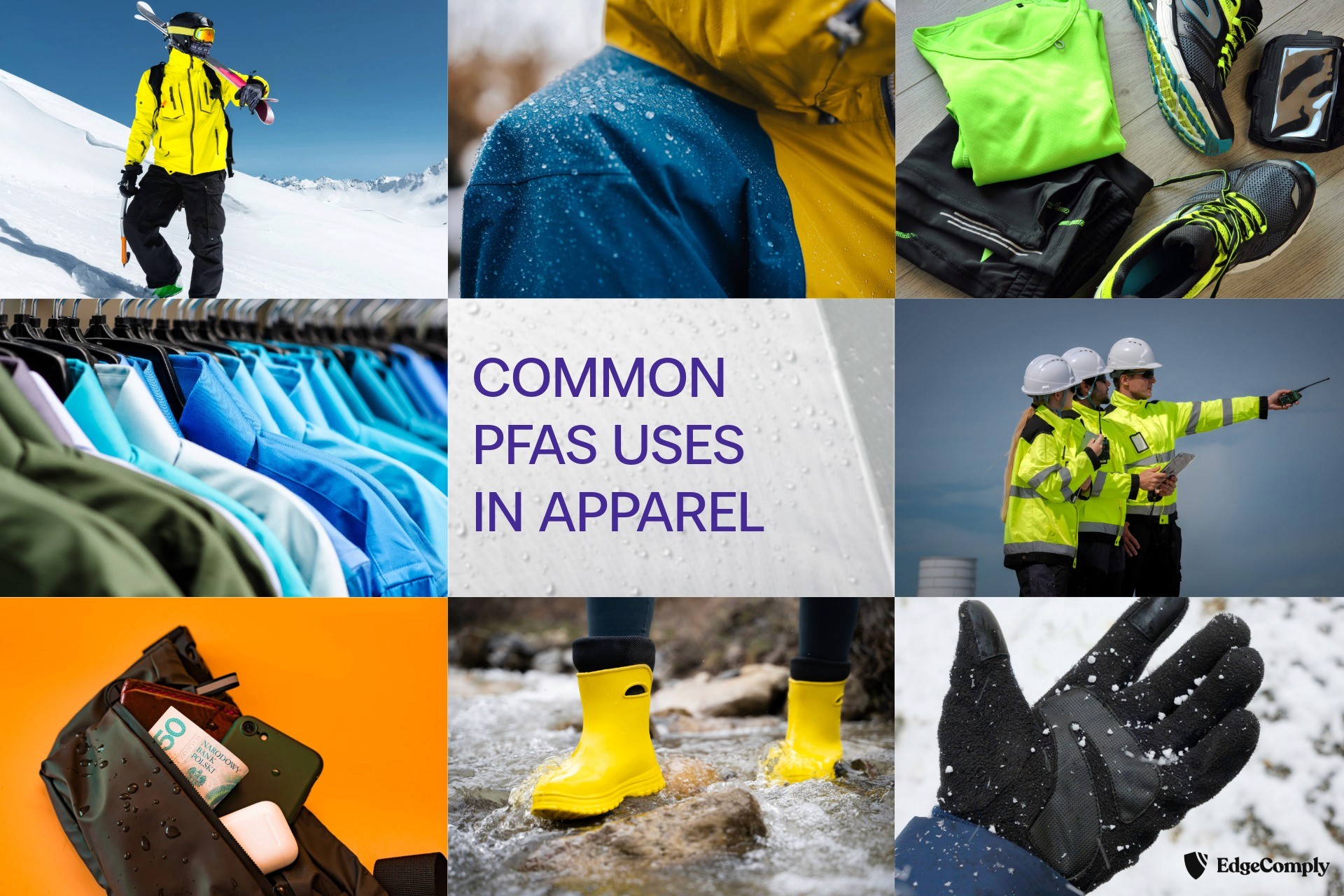
PFAS and related chemicals often help products resist water, stains and wear. Some common uses in apparel include:
Waterproof jackets
Raincoats
Outdoor clothing
Ski and snow clothing
Performance sportswear
Waterproof footwear
Bags and accessories
and much more.
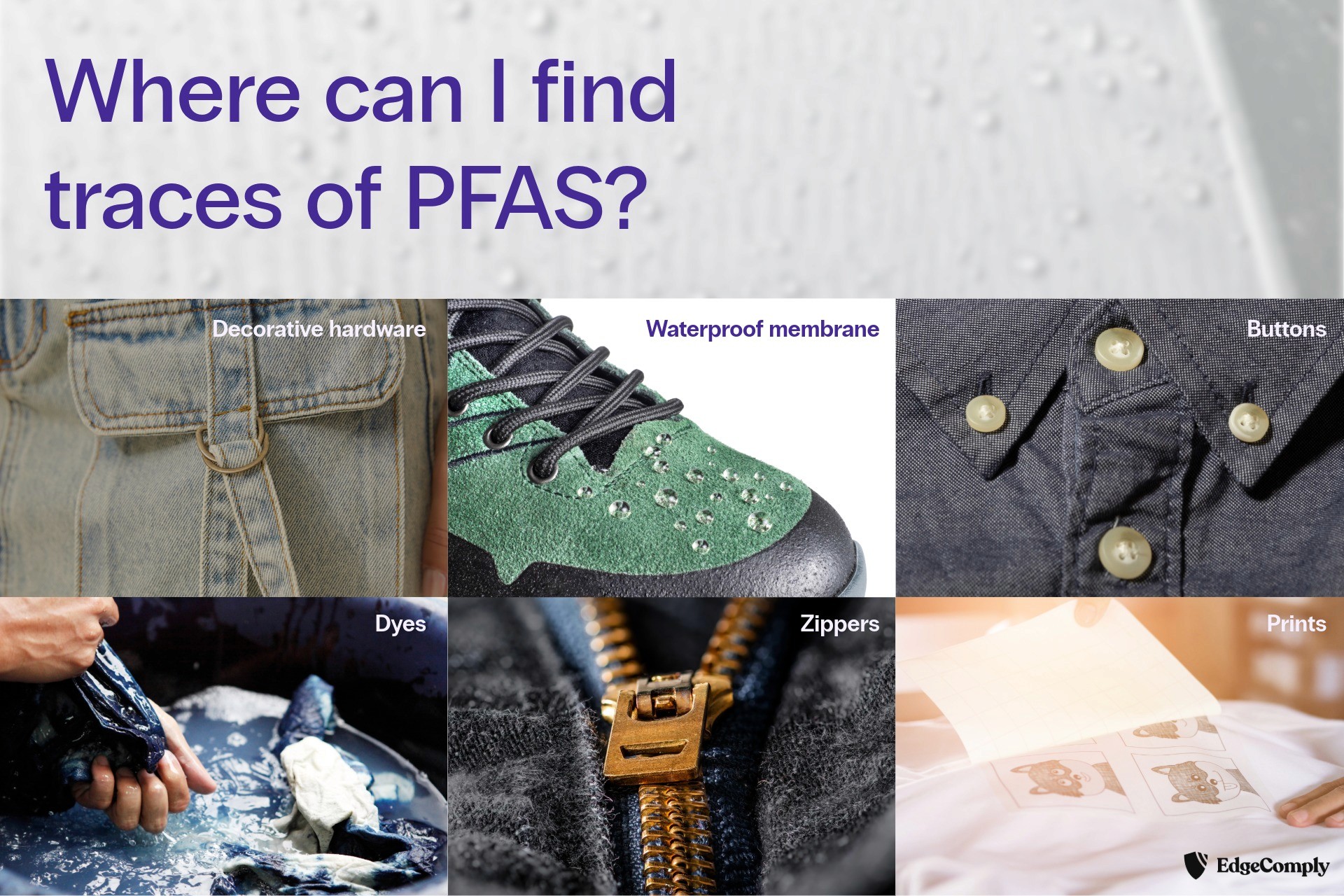
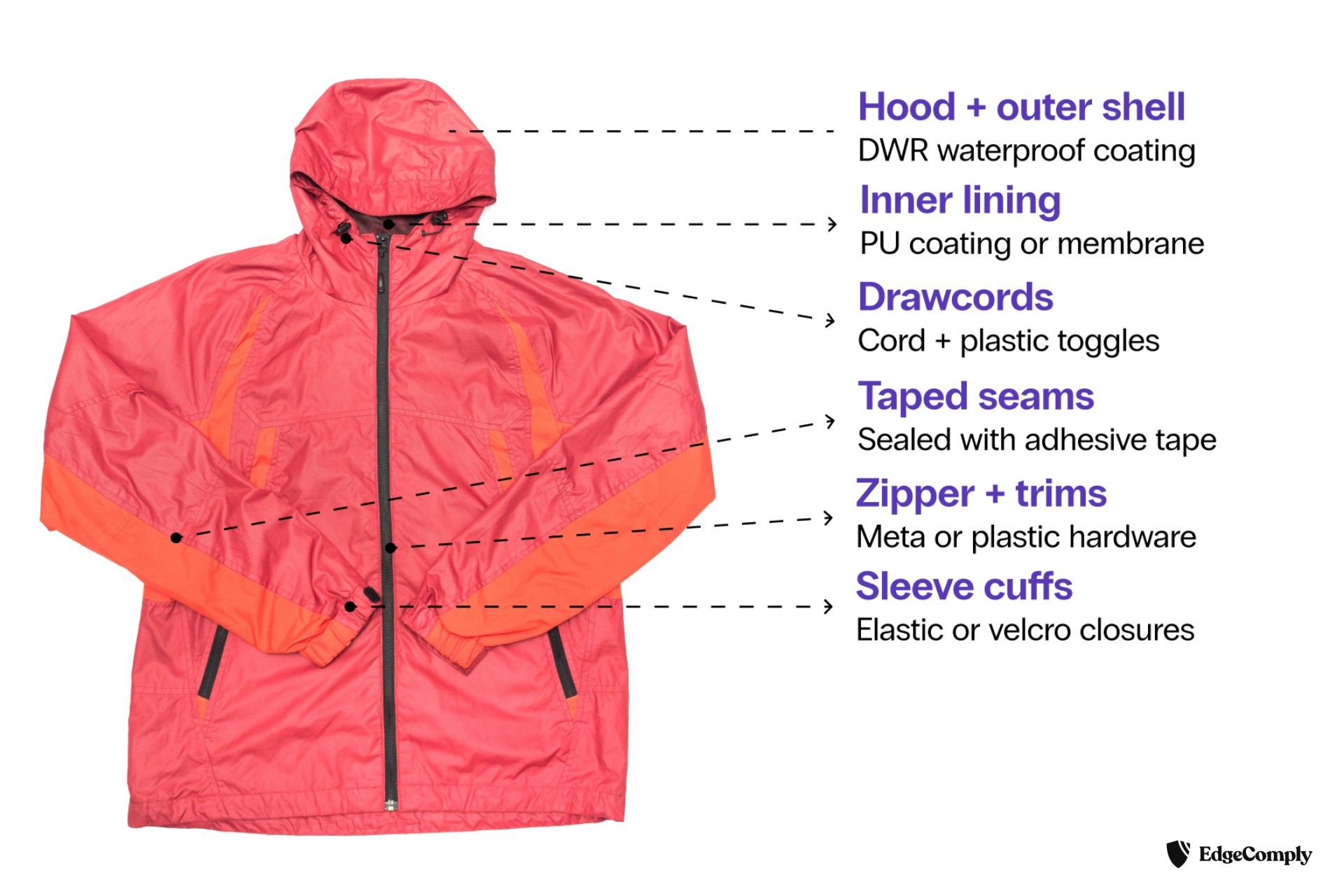
However, it's hard to tell if a product contains PFAS just by looking at it. Even if the main fabric does not use these finishes, its details and trims might contain traces of PFAS. Teams often overlook chemicals hidden in these small elements:
Dyes
Metal trims
Zips
Prints
Buttons
and more.
Additionally, PFAS can get into your products through factory cross-contamination. If you source from suppliers abroad, your supply chain visibility is naturally low. This means your brand’s products could unknowingly exceed the new PFAS limits. For this reason, broad supplier "PFAS-free" claims aren't always enough.
If you think your brand's products might contain PFAS, testing for it is the obvious approach. However, rushing to test all products isn't always the best choice for several reasons.
First, you may already have supplier proof, such as OEKO-TEX certifications. These certificates help, but they don’t cover the full product. Second, testing every product creates unnecessary costs; hence, a strategic approach is better.
To stay compliant, brands need supplier declarations, component testing and defensible documentation. For this, a risk-based or component-based method is a clever approach. In these methods, compliance experts first identify which elements are likely to contain PFAS. Then, they create a structure based on your portfolio to determine what needs testing. At EdgeComply, we can help your brand build this structure and check for broader compliance gaps with a Full Compliance Audit. Through this service, your brand can:
Understand exactly what rules and requirements apply.
Find the gaps you didn't know you had.
Help you clearly focus on what matters most.
Get a clear plan to full compliance.

What are the consequences if it's still there?
Many notable brands have faced scrutiny over intentionally added PFAS. In April 2026, Lululemon came under investigation over the possible presence of PFAS in its activewear. Toxicologist Kelly Johnson-Arbor stated that, like many other activewear brands that outsource manufacturing to large factories in Asia, PFAS can still occur through contamination from a nearby company or factory.
Lululemon responded that it phased out all PFAS from its products a few years ago. However, investigations like these attract media attention and tend to hurt audience trust. This shows how quickly PFAS becomes more than a technical chemical issue.
Bottom line
PFAS doesn't need to be confusing.
The first step for apparel brands is to determine where PFAS might be hiding in your products. Check the most likely fabrics and finishes and which products contain them.
Second, regularly check your supply chain for potential PFAS entry points. If the PFAS source is the same in every check, it may be time to look for alternatives in your supply chain.
Finally, stay informed about regulatory requirements in your target markets. New rules announced recently may take effect in a couple of years; however, that requires your brand to act now. EdgeComply hosts webinars that inform apparel brands about upcoming regulations, portfolio risks, and the actions needed to ensure compliance.
PFAS restrictions are ever-evolving and vary by country. If you don't have an in-house compliance team, you don't have to figure it all out alone. EdgeComply can help you find compliance gaps, understand which rules apply to your products, and create a practical plan for new regulations, so you stay ahead of market regulators.